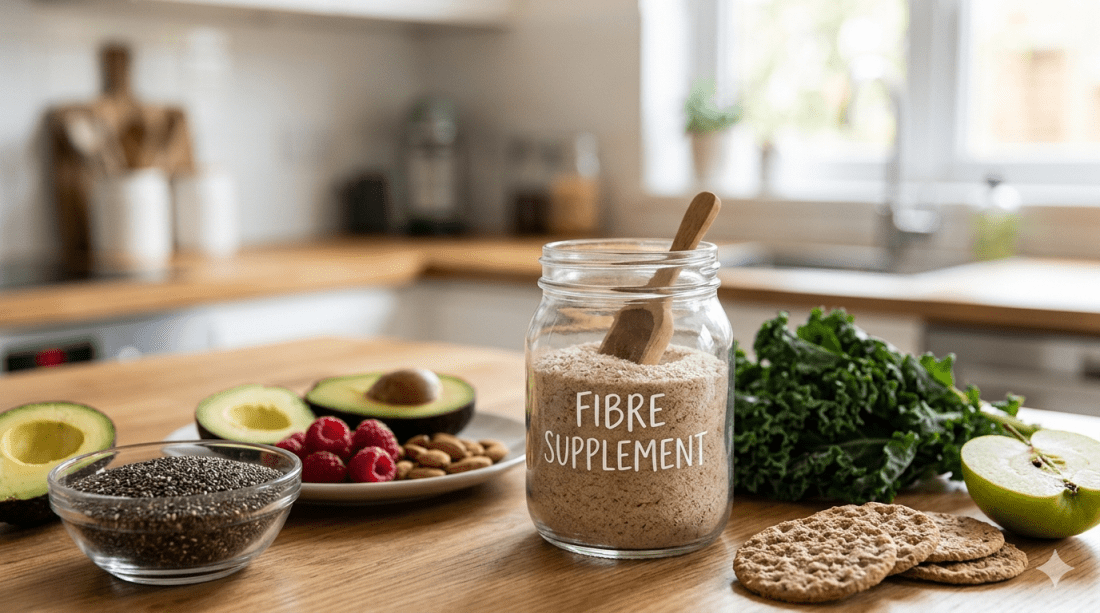
Do You Actually Need a Fibre Supplement? Here’s What You Should Know

We talk a lot about fibre in the wellness world and for good reason. It’s one of the most powerful, underrated tools we have for supporting digestion, blood sugar, mood, and even heart health.

But what happens when you’re not getting enough from food alone? That’s where fibre supplements come in 

Like most things in nutrition, the answer isn’t one-size-fits-all.

Who Might Actually Benefit From a Fibre Supplement?

The honest truth is that most of us aren’t getting enough fibre from our diets. In the UK, the recommended daily amount is 30g for all adults yet most of us are only getting around 20g a day. That’s a significant gap, and it has real consequences for our digestion, energy, and mood.

There are a few reasons this happens. Access to fresh, whole foods isn’t equal cost and location matter more than we like to admit. Some popular eating approaches, like the ketogenic diet, naturally reduce fibre-rich plant foods. And for others, certain health conditions like constipation, type 2 diabetes, or high blood pressure may genuinely benefit from supplementation.

If you’re unsure whether a supplement is right for you, it’s always worth speaking with your GP or a registered dietitian first. They can help you understand whether you’re getting enough from food and where a supplement might genuinely help.

Soluble vs. Insoluble Fibre What’s the Difference?

If you’ve been reading along on the blog, you’ll know we recently covered this in depth. But here’s the quick version:

Soluble fibre dissolves in water and forms a gel in your digestive tract. It helps regulate blood sugar, supports cholesterol levels, and can improve both constipation and diarrhoea.

Insoluble fibre doesn’t dissolve instead, it adds bulk to your stool and keeps things moving efficiently through your gut.

Most fibre supplements contain one type or a blend of both. When you’re reading labels, here’s what to look out for:

Soluble fibre sources include psyllium, inulin, and glucomannan. Insoluble sources include wheat bran and cellulose. Supplements come in powders, capsules, liquids, and gummies whichever form fits most easily into your daily routine is the right one for you.

Are Fibre Supplements Safe to Take Every Day?

Generally, yes.A  few things are worth keeping in mind:

Always drink plenty of water when taking a fibre supplement. Without adequate hydration, you may experience bloating, gas, or cramping — especially when you’re just starting out. If you’re new to a higher-fibre intake, increase gradually rather than all at once. Your gut needs time to adjust.

And while supplements can be genuinely helpful, they don’t replace the full nutritional benefit of whole foods. A handful of chickpeas, some berries, a bowl of oats these bring not just fibre but vitamins, minerals, antioxidants, and phytonutrients that a supplement simply can’t replicate.

When to Speak to a Professional First

Some people should be cautious with fibre supplements or avoid them entirely — including those with certain digestive conditions, people taking blood thinners or diabetes medications, and anyone with swallowing difficulties or known gut obstructions.

If your digestive symptoms are persistent or severe, please don’t rely on supplements alone. Chronic changes in bowel habits, bloating, or discomfort should always be assessed by a healthcare professional to rule out anything more serious.

The Inside Out View

Fibre is foundational. It feeds your gut bacteXria, supports your mood (remember — 90% of serotonin is made in the gut), stabilises your blood sugar, and keeps your digestion running smoothly.

The UK recommendation of 30g a day is achievable but it does require intention. Whole foods first, always. Think wholegrains, legumes, fruits, vegetables, nuts, and seeds at every meal. But if you’re genuinely struggling to meet your needs through diet alone, a good quality supplement — wisely can be a supportive addition to your routine.

As always, the goal isn’t perfection. It’s nourishment. 🌿

Have you ever tried a fibre supplement? I’d love to know your experience drop a comment below.

With warmth,

Leena 🌿

What Is Fibre and Why Does It Matter?

Fibre is the part of plant foods that your body cannot digest. That’s exactly what makes it so powerful.

While it passes through your digestive system largely intact, it does extraordinary things along the way feeding your beneficial gut bacteria, slowing the absorption of sugar into your bloodstream, keeping your bowels moving, and reducing inflammation throughout the body.

Fibre isn’t just a digestive aid. It directly influences your mood, your energy, your hormones, and your long-term health.

So How Much Do You Actually Need?

The NHS recommends 30g of fibre per day for adults. Most people in the UK are getting around 18g barely half of what their body needs.

To put 30g into perspective:

1 slice of wholegrain bread = roughly 2g

1 medium apple = roughly 4g

portion of broccoli = roughly 3g

1 tin of chickpeas = roughly 10g

1 tablespoon of chia seeds = roughly 5g

You can see how quickly the gap appears — especially if your diet includes a lot of processed or refined foods, which contain very little fibre at all.

What Happens When You Don’t Get Enough?

Low fibre intake is linked to:

Unstable blood sugar without fibre to slow things down, sugar hits your bloodstream fast, spiking cortisol and triggering that mid-morning anxiety or afternoon crash.

Poor gut health your beneficial gut bacteria literally feed on fibre. Without it, they starve, and your microbiome diversity drops. Since 90% of your serotonin is produced in your gut, this has a direct impact on your mood.

Sluggish digestion — constipation, bloating, and that heavy, uncomfortable feeling are classic signs of too little fibre.

Increased inflammation low fibre diets are associated with higher levels of chronic inflammation, which affects everything from your energy levels to your immune system.

5 Simple Ways to Eat More Fibre Every Day

You don’t need to overhaul your diet overnight. Small, consistent additions make a huge difference.

1Add seeds to everything

A tablespoon of chia seeds or ground flaxseed into your yoghurt, porridge, or smoothie adds 4–5g of fibre instantly. You won’t even taste it.

Choose whole grains over refined

Swap white bread for wholegrain, white rice for brown or wild rice. The fibre content can be two to three times higher.

Eat the skin

Leave the skin on your potatoes, apples, courgettes, and cucumbers. That’s where a significant portion of the fibre lives.

Add legumes to your meals

Chickpeas, lentils, black beans, and butter beans are fibre powerhouses. Add a handful to soups, salads, or stews  even one portion a day makes a noticeable difference.

Aim for variety, not just quantity

Different plants feed different strains of beneficial gut bacteria. Try to eat 30 different plant foods a week — this includes fruits, vegetables, wholegrains, nuts, seeds, herbs, and spices. It sounds like a lot, but a mixed salad alone can contain eight to ten.

One Important Thing to remember

If you’re currently eating very little fibre, increase it gradually. Adding too much too quickly can cause bloating and discomfort as your gut bacteria adjust. Increase slowly, drink plenty of water, and give your digestive system time to adapt.

The Bottom Line

Fibre is one of the most powerful and most underrated tools for your health. It stabilises your blood sugar, supports your mood, nourishes your gut, and protects your long-term wellbeing — all for the cost of a handful of seeds or an extra portion of vegetables.

Thirty grams a day. That’s your goal. And with small, intentional changes, it’s completely achievable.

💬 I’d love to hear from you

Do you think you’re hitting 30g a day? Or does this post make you realise the gap might be bigger than you thought?

Drop a comment below I read and reply to every single one. And if this was useful, please share it with someone who needs to hear it. You never know whose health you might change today. 🌿

With warmth,

Leena 🌿

The Stress-Blood Sugar Connection Nobody Talks About

We talk a lot about sugar and diabetes. But we don’t talk nearly enough about stress.

And that is a conversation that needs to change.

Your Stress Hormones Raise Your Blood Sugar

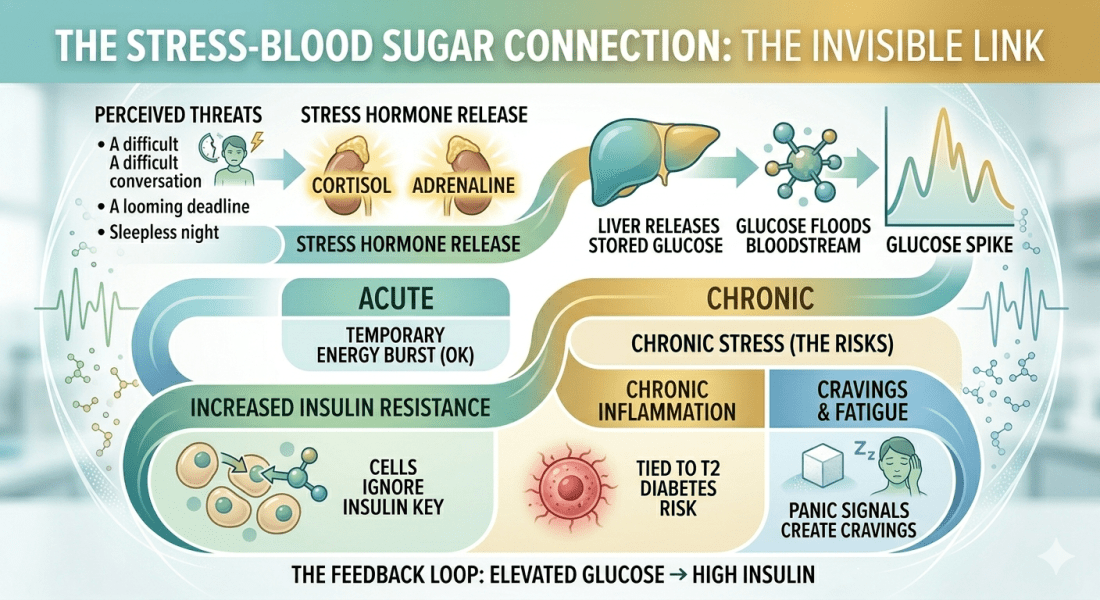
Here is something that surprises most people: you don’t have to eat anything to experience a spike in blood sugar. Stress alone can do it.

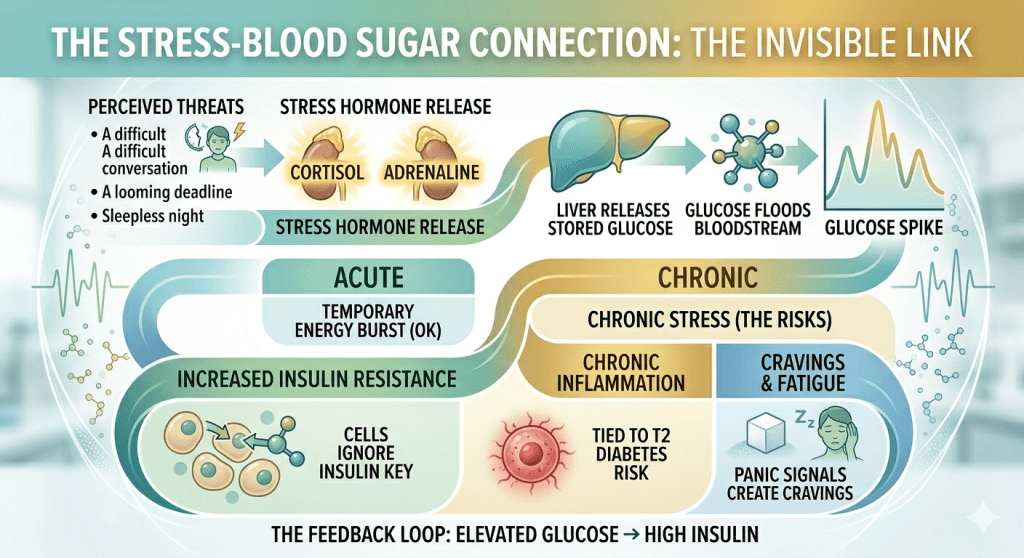
When your body perceives a threat — whether that’s a difficult conversation, a looming deadline, a sleepless night, or simply never switching off  it releases cortisol and adrenaline. These hormones signal the liver to release stored glucose into the bloodstream, giving your body the energy it needs to fight or flee.

This is a brilliant survival mechanism. But when stress is chronic — when it happens day after day, week after week your body is constantly flooding your bloodstream with glucose. And your cells are constantly being asked to manage it. Over time, this wears the system down.

What Chronic Stress Does to Blood Sugar

Increased insulin resistance meaning your cells become less responsive to insulin’s signals

Elevated fasting blood sugar levels

Increased cravings for sugar and refined carbohydrates

Disrupted sleep, which further impairs blood sugar regulation

Increased inflammation, which is closely linked to Type 2 diabetes risk

This does not mean that stress causes diabetes. The picture is always more complex than that. But it does mean that nervous system health and metabolic health are far more connected than most people realise. L

The Women Who Are Most at Risk:

The women I speak to most often are the ones carrying everything. The ones who are managing households, careers, relationships, and everyone else’s emotional needs often while neglecting their own.

These women are frequently exhausted, frequently anxious, and frequently dismissing their own symptoms as “just stress.”

But the body keeps score. And chronically elevated cortisol is one of the most significant and least discussed risk factors for metabolic health challenges, including blood sugar dysregulation.

What Actually Helps

You cannot think your way out of a stressed nervous system, but you can nourish it.

Eat regularly. Skipping meals when you’re stressed is one of the worst things you can do for your blood sugar. Three balanced meals with protein, fat, and fibre at each keeps cortisol from spiking and your energy from crashing.

Prioritise magnesium. Stress depletes magnesium rapidly, and magnesium plays a key role in insulin sensitivity. Dark leafy greens, pumpkin seeds, dark chocolate, and almonds are your friends.

Build moments of stillness into every day. Not scrolling. Not multitasking. Just breathing. Even five minutes of slow, intentional breath activates your parasympathetic nervous system and begins to lower cortisol.

Sleep as though your health depends on it. Because it does.

Seek support. Whether that’s a trusted friend, a therapist, or a coach you are not meant to carry all of this alone.

This Diabetes Week

If you are living with diabetes, I see the invisible work you do every single day to manage your condition. You deserve support, not judgement.

And if you don’t have a diagnosis but recognise yourself in these words your body is asking you for something. It’s worth listening.

💬 Did this change how you think about stress and your health? Share your thoughts in the comments below. And if this post spoke to you, please share it with someone who needs to hear it.

With warmth,

Leena 🌿

What Your Blood Sugar Is Really Trying to Tell You (and How to Listen)

This week is Diabetes Week in UK whether you have diabetes, are at risk, or simply want to understand your body better, this post is for you.

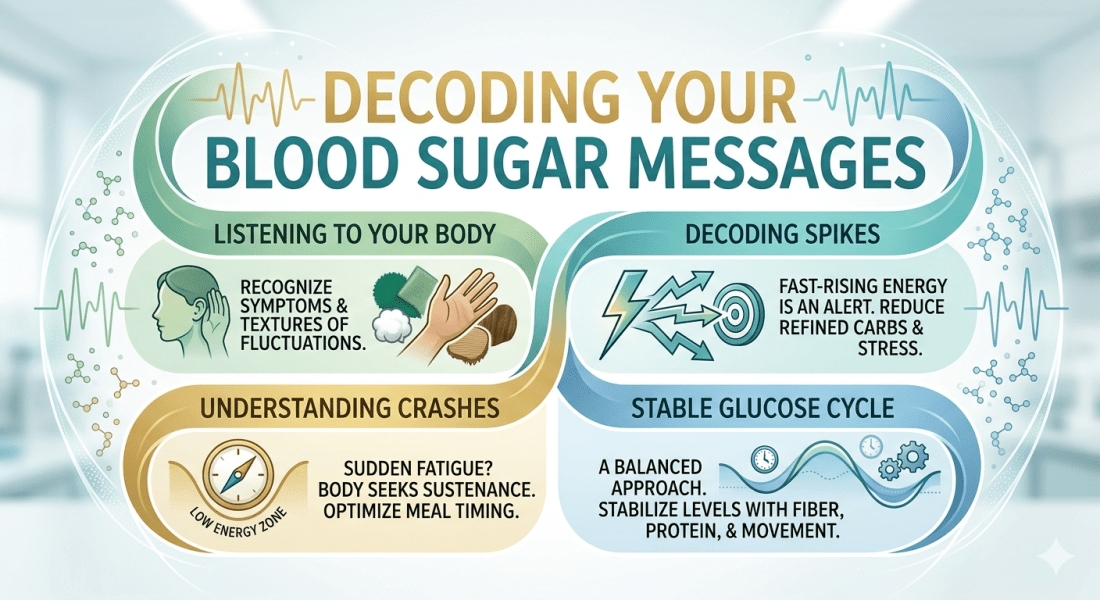
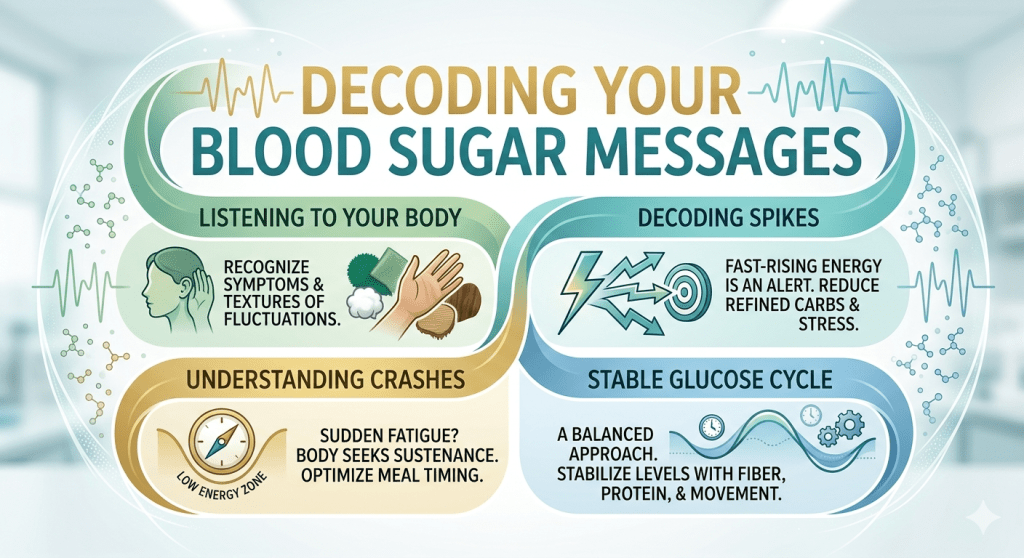
Because here’s something most people don’t realise: your blood sugar is talking to you every single day. Through your energy levels, your mood, your cravings, your concentration, and the way you feel between meals. Most of us just haven’t been taught how to listen.

What Blood Sugar Instability Actually Feels Like

You don’t have to have diabetes to experience blood sugar fluctuations. In fact, millions of people live with the symptoms of blood sugar instability without ever connecting them to what they’ve eaten.

Here are some signs your blood sugar may be on a rollercoaster:

You feel irritable, anxious, or shaky if you skip a meal.

You experience an energy crash in the mid-morning or mid-afternoon..

You crave sugar or carbohydrates after eating.

You feel foggy or unable to concentrate between meals.

You wake at 3am and can’t get back to sleep.

You feel better immediately after eating but tired again an hour later.

If any of these feel familiar, your blood sugar is asking for support.

Why This Matters Beyond Diabetes

Chronically unstable blood sugar puts your nervous system under stress. Every time your blood sugar crashes, your body releases cortisol and adrenaline to bring it back up. Over time, this constant stress response contributes to fatigue, anxiety, inflammation, hormonal imbalance, and yes over time, an increased risk of Type 2 diabetes.

Understanding your blood sugar isn’t just for people with a diagnosis. It is for every person who wants to feel well in their body.

5 Ways to Support Your Blood Sugar Every Day

Never eat carbohydrates alone. Always pair them with protein, healthy fat, or fibre. Toast with nut butter. Apple with almonds. Rice with eggs or salmon. This slows the release of sugar into the bloodstream and prevents spikes and crashes.

Eat within 90 minutes of waking. Skipping breakfast sends your blood sugar crashing first thing, triggering a cortisol spike that sets an anxious, reactive tone for your entire day.

Prioritise your sleep. Poor sleep directly impairs insulin sensitivity meaning your body struggles to manage blood sugar effectively when you’re tired. Seven to eight hours is not a luxury. It is metabolic medicine.

Move after meals. Even a ten-minute walk after eating helps your muscles absorb glucose from the bloodstream, reducing post-meal blood sugar spikes significantly.

Reduce ultra-processed foods gradually. You don’t have to be perfect. Start by crowding them out adding more whole foods to your plate rather than focusing on what to remove.

A Gentle Reminder This Diabetes Week

If you have diabetes Type 1, Type 2, or gestational please know that your condition is not a reflection of your worth, your willpower, or your character. Diabetes is a complex condition influenced by genetics, environment, stress, and so much more.

This week, let’s commit to understanding more and judging less.

💬 Did any of the blood sugar signs above resonate with you? Drop a comment below I read and reply to every one.

With warmth,

Leena 🌿

Soluble vs. Insoluble Fiber: What’s the Difference and Why Do You Need Both?

Key Takeaways

  • Soluble fibre dissolves in water and forms a gel-like substance that may help regulate blood sugar, support heart health, and improve digestion.
  • Insoluble fibre does not dissolve in water and helps promote regular bowel movements by adding bulk to stool.
  • Most plant-based foods contain a combination of both types of fibre.
  • Adults should aim for approximately 22–34 grams of fibre daily, depending on age and sex.
  • Eating a variety of fruits, vegetables, legumes, nuts, seeds, and whole grains is the easiest way to get enough fibre.

What Is Fibre?

Fibre is a type of carbohydrate found in plant foods that the body cannot fully digest. Unlike other carbohydrates that are broken down into sugar and absorbed into the bloodstream, fibre passes through much of the digestive system largely intact.

Although it isn’t digested, fibre plays a vital role in overall health. It supports digestion, helps regulate blood sugar, promotes healthy cholesterol levels, and may reduce the risk of several chronic diseases.

There are two primary types of dietary fibre:

Soluble Fiber

Soluble fibre dissolves in water and forms a gel-like substance in the digestive tract. This slows digestion and can help control blood sugar and cholesterol levels.

Insoluble Fiber

Insoluble fibre does not dissolve in water. Instead, it adds bulk to stool and helps food move more efficiently through the digestive system.

Most plant foods contain both types, although some foods provide higher amounts of one than the other.

Benefits of Dietary Fibre

A diet rich in fibre has been associated with numerous health benefits, including:

  • Supporting digestive health
  • Promoting regular bowel movements
  • Helping regulate blood sugar levels
  • Lowering LDL (“bad”) cholesterol
  • Supporting healthy weight management
  • Increasing feelings of fullness
  • Reducing inflammation
  • Supporting heart health
  • Potentially lowering the risk of certain cancers, including colorectal cancer

Benefits of Soluble Fibre

Soluble fibre is particularly known for its ability to absorb water and form a gel. This process may help:

Improve Blood Sugar Control

By slowing digestion, soluble fibre can reduce rapid spikes in blood glucose after meals. This can be particularly beneficial for people with insulin resistance or diabetes.

Lower Cholesterol Levels

Soluble fibre binds with cholesterol-containing compounds in the digestive tract, helping remove them from the body and potentially lowering LDL cholesterol.

Help Manage Diarrhoea

Because it absorbs water and adds consistency to stool, soluble fibre may help improve loose stools and diarrhoea.

Increase Fullness

The gel-forming effect of soluble fibre slows stomach emptying and may help control appetite.

Benefits of Insoluble Fibre

Insoluble fibre acts differently within the digestive tract.

Supports Regular Bowel Movements

By adding bulk to stool, insoluble fibre helps move waste through the intestines more efficiently.

Helps Prevent Constipation

Insoluble fibre attracts water into stool, making it easier to pass and reducing straining during bowel movements.

Supports Digestive Health

A healthy digestive system depends on regular movement through the gut. Insoluble fibre helps maintain this process and may contribute to long-term bowel health.

Soluble vs. Insoluble Fibre: Which Is Better?

Neither type is better than the other. They simply provide different benefits.

Health GoalSoluble FiberInsoluble Fiber
Relieve Diarrhea✓✓
Relieve Constipation✓✓
Lower Cholesterol✓✓
Improve Blood Sugar Control✓✓
Increase Fullness✓✓
Support Weight Management✓✓
Promote Regular Digestion✓✓

For optimal health, it’s best to consume a variety of foods that provide both types of fibre.

Best Sources of Soluble Fibre

Foods rich in soluble fibre include:

  • Oats and oat bran
  • Barley
  • Apples
  • Citrus fruits
  • Bananas
  • Pears
  • Carrots
  • Sweet potatoes
  • Brussels sprouts
  • Beans
  • Lentils
  • Chickpeas
  • Psyllium husk

Best Sources of Insoluble Fibre

Foods rich in insoluble fibre include:

  • Whole wheat
  • Wheat bran
  • Brown rice
  • Quinoa
  • Nuts
  • Seeds
  • Leafy greens
  • Broccoli
  • Cauliflower
  • Fruit skins and vegetable peels

How Much Fibre Do You Need?

General daily recommendations suggest:

GroupDaily Fibre Target
Women22–28 grams
Men28–34 grams

Unfortunately, many adults consume far less than recommended. Increasing intake gradually can help prevent digestive discomfort while allowing the body to adapt.

Can You Eat Too Much Fibre?

While fibre is beneficial, suddenly increasing intake can sometimes lead to:

  • Bloating
  • Gas
  • Abdominal discomfort
  • Cramping
  • Changes in bowel habits

These symptoms are more common when fibre intake increases rapidly or when adequate water intake is not maintained. Drinking plenty of fluids is essential when consuming a high-fibre diet.

People with certain digestive conditions, including active inflammatory bowel disease flare-ups, may need personalised guidance from a healthcare professional before significantly increasing fibre intake.

Frequently Asked Questions

Is soluble or insoluble fibre better?

Both are important. Soluble fibre supports cholesterol, blood sugar, and appetite regulation, while insoluble fibre helps maintain regular bowel movements and digestive health.

Which fibre helps with constipation?

Both can help, but insoluble fibre is particularly effective because it adds bulk to stool and promotes movement through the digestive tract.

Which fibre helps with diarrhoea?

Soluble fibre may help by absorbing excess water and improving stool consistency.

Do I need fibre supplements?

Whole foods should be your primary source of fibre. Supplements can be useful in certain situations but generally provide fewer nutritional benefits than fruits, vegetables, legumes, and whole grains.

Final Comments

Soluble and insoluble fibre each play unique roles in maintaining good health. Soluble fibre supports blood sugar control, cholesterol management, and digestive balance, while insoluble fibre promotes regular bowel movements and digestive efficiency.

Rather than focusing on one type over the other, aim to eat a wide range of plant-based foods every day. A varied diet rich in fruits, vegetables, legumes, nuts, seeds, and whole grains will naturally provide the balance of fibre your body needs to thrive.

Sd

Nourishing Breakfasts That Take Less Than 5 Minutes (and Support Your Mood All Day)

Let’s talk about breakfast. Not in a complicated, track-your-macros way. In a simple, nourish-your-nervous-system, feel-good-all-morning way.

what you eat within the first 90 minutes of waking up sets your blood sugar — and your mood — for the entire day.

Here are three of my favourite quick, nourishing breakfasts that I genuinely make and eat myself.

1. Greek Yoghurt with Berries and Seeds

Spoon full-fat Greek yoghurt into a bowl. Add a handful of frozen berries (they defrost in minutes), a tablespoon of pumpkin seeds, and a drizzle of honey.

Why it works: The protein in the yoghurt stabilises your blood sugar. The berries are full of antioxidants that support your mood and reduce inflammation. The pumpkin seeds are one of the richest sources of magnesium the mineral most of us are deficient in and the one most linked to anxiety and poor sleep.

This breakfast takes three minutes and it genuinely changes how you feel by 11am.

2. Oats with Nut Butter and Banana

Make your porridge however you like it. Stir in a tablespoon of almond or peanut butter while it’s still warm. Slice half a banana on top.

Why it works: Oats are a slow-release carbohydrate, meaning they release energy steadily rather than spiking and crashing your blood sugar. The nut butter adds healthy fat and protein to keep you full and focused. And bananas contain tryptophan — a precursor to serotonin, your feel-good hormone.

Warm, comforting, and genuinely good for your brain chemistry.

3. Eggs on Rye Toast with Avocado

Toast one slice of rye bread. Slice a quarter of an avocado. Done.

Why it works: Avocado provides healthy monounsaturated fats that support hormone production. Rye bread is lower on the glycaemic index than white bread, so it won’t spike your blood sugar.

This is the breakfast I eat when I want to feel sharp, calm, and completely nourished.

None of these breakfasts require meal prep, complicated ingredients, or more than five minutes of your morning. They just require the decision to nourish yourself first before the emails, before the chaos, before everything else.

You are worth five minutes,

Which one are you trying this weekend? Let me know in the comments.


With warmth,
Leena 🌿

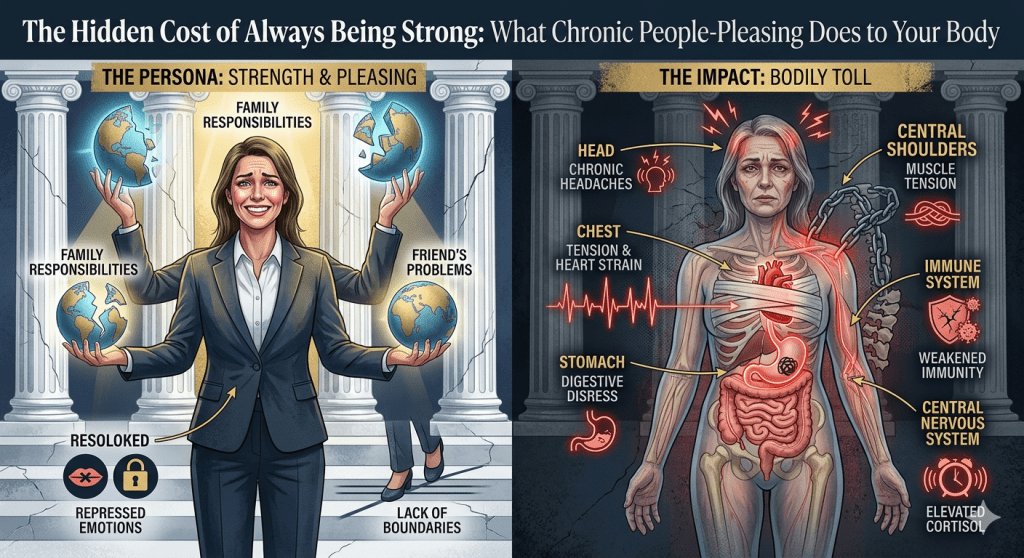
The Hidden Cost of Always Being Strong: What Chronic People-Pleasing Does to Your Body

There is a particular kind of exhaustion that comes from

always being the strong one.

The one who holds everything together. The one who says yes when she means no. The one who manages everyone else’s feelings before she even checks in with her own.

If you recognise yourself in those words this post is for you.

People-pleasing isn’t a personality trait. It’s a nervous system response.

Most of us learn to people-please very early in life. We discover that keeping others happy keeps us safe from conflict, from disapproval, from being seen as difficult or too much. Over time, this becomes automatic. We stop asking ourselves what we want and need. We simply respond to what others seem to require of us.

What we don’t realise is that this constant monitoring this hypervigilance to other people’s moods and needs is exhausting the nervous system on a profound level.

Your nervous system cannot distinguish between physical danger and social threat. Disapproval, conflict, and disappointing others all register as danger signals. And your body responds accordingly raising cortisol, tightening your muscles, heightening your alertness. Every single time.

When this happens repeatedly across an entire lifetime, the body starts to pay a price.


What chronic people-pleasing does to your body


It keeps cortisol chronically elevated.

Cortisol is your primary stress hormone. In short bursts it’s helpful. But when it’s elevated day after day because you’re constantly anticipating other people’s reactions, managing their feelings, bracing for conflict it begins to suppress your immune system, disrupt your sleep, and contribute to that bone-deep exhaustion that no amount of rest seems to fix.

It disconnects you from your own hunger and needs


When you spend your life attending to what everyone else wants, you stop noticing what you want. Many chronic people-pleasers struggle to identify their own hunger, their own preferences, their own emotions. The body’s signals become quiet and eventually, you stop hearing them altogether.


It creates chronic muscle tension

Always being on always performing okayness, always managing the atmosphere in a room requires the body to be in a constant state of readiness. The jaw clenches. The shoulders rise. The stomach tightens. Over time, this tension becomes the baseline. You forget what it feels like to be truly at ease in your own body.


It depletes your energy at a cellular level


Emotional labour the constant work of managing relationships, smoothing things over, anticipating needs is genuinely physically tiring. It consumes glucose, elevates cortisol, and taxes the same physiological systems as physical exertion. The tiredness you feel is real. It is not weakness. It is the cost of years of invisible work.


What begins to help


The path out of chronic people-pleasing is not about suddenly becoming selfish or cold. It’s about learning to include yourself in the circle of people whose needs matter.

It begins with noticing. Noticing when you say yes and mean no. Noticing the tightening in your chest when someone asks something of you that you don’t want to give. Noticing the relief you feel even briefly when you allow yourself to choose yourself.

It continues with practice. Saying no to one small thing. Pausing before you automatically agree. Asking yourself before you respond to anyone else what do I actually need right now?


It deepens with support. Because unlearning a lifetime of conditioning is not something you should have to do alone.

You are allowed to have needs, Leena 🌿
You are allowed to be tired.


You are allowed to take up space.


💬 Does this resonate with you? I’d love to hear your thoughts in the comments below. And if this post spoke to you, please share it with a woman in your life who needs to hear it today.


With warmth,
Leena 🌿

Subscribe at the bottom of the page for weekly posts on nervous system health, nutrition, and holistic wellbeing.

The 10-Minute Wind-Down Routine That Will Change How You Sleep

If you’re lying awake at night with your mind racing running through tomorrow’s to-do list, replaying conversations, wondering why you can’t just switch off this post is for you.

The problem isn’t that you can’t sleep. The problem is that you haven’t given your nervous system permission to stop.


Here’s a 10-minute wind-down routine that genuinely works. Not because it’s complicated. Because it’s consistent.

Minutes 1–2: Put your phone in another room not on silent. Not face down. Another room. The mere presence of your phone on your bedside table keeps your brain on low-level alert waiting, watching, ready to respond. Remove it completely and notice how the room feels different.


Minutes 3–4: Make a warm drink
Chamomile tea, warm oat milk, or simply warm water with honey. The act of making something warm and holding it in your hands is a signal to your nervous system that the day is over. You are safe. You can slow down now.


Minutes 5–7: Write a brain dump
Take a piece of paper and write down everything that’s in your head. Worries, tomorrow’s tasks, random thoughts all of it. Get it out of your mind and onto the page. Your brain holds onto unfinished thoughts to make sure you don’t forget them. Once they’re written down, it can finally let go.


Minutes 8–10: Legs up the wall
Lie on your back and rest your legs up against the wall. This gentle inversion calms the nervous system, reduces cortisol, and signals to your body that it’s time to rest. Even five minutes in this position can dramatically reduce the time it takes you to fall asleep.

That’s it. Ten minutes. The same ten minutes every night.

Consistency is what makes this work. Your nervous system loves routine. When you do the same calming sequence every evening, your body begins to anticipate sleep — and falling asleep becomes easier and easier over time.
You deserve rest, Leena 🌿


Which part of your evening routine do you find hardest to wind down from?

Tell me in the comments.

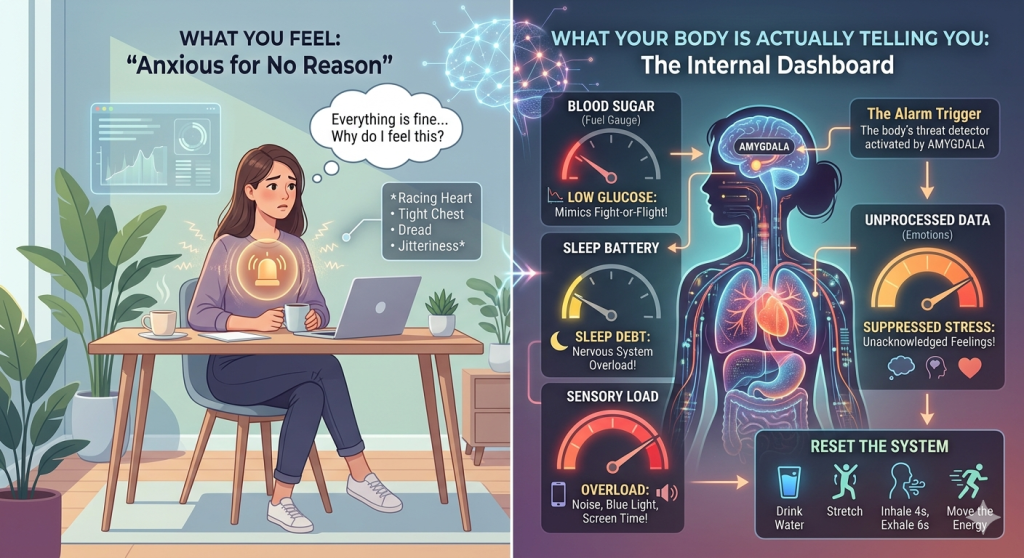
Why You Feel Anxious for No Reason — and What Your Body Is Actually Trying to Tell You

Have you ever woken up with that low-level feeling of dread, a tightness in your chest, a flutter of anxiety and had absolutely no idea why?

No big event coming up. Nothing obviously wrong. Just that quiet, constant hum of unease that follows you through the day.

You’re not imagining it. And you’re not broken. But what’s happening inside your body might surprise you.
Anxiety isn’t always in your mind

We tend to think of anxiety as a psychological problem, something to do with our thoughts, our worries, our mindset. And sometimes it is. But very often, what we experience as anxiety is actually a physiological response happening in the body completely independent of what we’re consciously thinking about.

Your nervous system is constantly scanning for danger. It doesn’t distinguish between a physical threat and an emotional one. A difficult conversation, a long to-do list, a blood sugar crash, chronic inflammation, poor sleep, too much caffeine all of these register as stress signals in your body. And your body responds the same way it always has: by releasing cortisol and adrenaline, raising your heart rate, and putting you on high alert.

That feeling? That is anxiety. And it started in your body, not your mind.

4 physical reasons you might feel anxious for no reason

1. Your blood sugar is unstable

This is one of the most underestimated causes of anxiety. When your blood sugar drops from skipping meals, eating refined carbs alone, or relying on caffeine our body releases cortisol to compensate. Cortisol raises your blood sugar again, but it also creates that familiar feeling of jitteriness, racing thoughts, and a sense that something is wrong.

If your anxiety tends to peak mid-morning or mid-afternoon, blood sugar instability could be the root cause.

2. Your nervous system is in chronic overdrive

Your nervous system has two settings: sympathetic (fight or flight) and parasympathetic (rest and digest). Most of us are living permanently in sympathetic mode checking phones first thing in the morning, never fully switching off, moving from one demand to the next without space to breathe.

When your nervous system never gets to rest, it starts to misfire. It registers ordinary situations as threats. And the result is that constant background anxiety that you can’t quite explain.

3. You’re not getting enough magnesium

Magnesium plays a crucial role in regulating the nervous system. It supports the production of GABA, the neurotransmitter that calms the brain down. When magnesium levels are low, the nervous system becomes hypersensitive and anxiety increases.

Most women are deficient in magnesium, particularly those under chronic stress, because stress depletes magnesium rapidly. Dark leafy greens, pumpkin seeds, dark chocolate, and almonds are among the richest dietary sources.

4. You’re not processing your emotions

Unfelt emotions don’t disappear. They settle in the body as tension, tightness, and that low-level unease we so often mistake for anxiety. Women who carry a lot who manage everyone else’s needs, who suppress their own feelings to keep the peace, who never quite allow themselves to fall apart 0ften experience this kind of body-held anxiety most acutely.

The body keeps score. And eventually, it asks to be heard.

What actually helps

Eat regular meals with protein and fibre to keep your blood sugar stable. Build moments of genuine stillness into your day not scrolling, not multitasking, just breathing. Add magnesium-rich foods to your diet daily. And find safe spaces to feel what you feel — whether that’s journalling, therapy, a trusted friend, or coaching.

Anxiety is not a character flaw. It is your body communicating with you. And when you learn to listen and respond with nourishment rather than resistance everything begins to shift.

You are not too sensitive. You are not overreacting. You are a human being whose body is asking for support.

💬 Does any of this resonate with you? Which of the four causes feels most familiar? 

Drop a comment below, I read and reply to every single one.

With warmth,
Leena 🌿

5 Small Things You Can Do This Morning to Feel Better Today

You don’t need a complete lifestyle overhaul to start feeling better. Sometimes the smallest shifts make the biggest difference especially when your nervous system is running on empty.

Here are five gentle things you can do this morning, right now, wherever you are.

Drink a glass of water before anything else. Before the coffee, before the phone, before the to-do list. Just water. Your body has been fasting all night and hydration is one of the simplest ways to support your energy and your mood from the very first moment of your day.

Take five slow breaths

Inhale for four counts and exhale for seven. Do this five times before you get out of bed. This simple breathing pattern activates your parasympathetic nervous system, your body’s rest and digest mode and sets a calmer tone for your entire morning.

Eat something within 90 minutes of waking; I know, I know you might not feel hungry. Skipping breakfast sends your blood sugar crashing, which triggers a cortisol spike, which feels a lot like anxiety. A handful of nuts, some Greek yoghurt, or a piece of fruit with nut butter is all you need to stabilise your energy and your mood.

Step outside for ten minutes  without your phone. Just you and some fresh air and a patch of sky. Nature genuinely lowers cortisol levels. It isn’t a luxury,  it’s medicine.

Write down one thing you’re not going to worry about today

Not a gratitude list or a to-do list. Just one thing you are consciously choosing to set down for today. One thing that can wait. Give yourself that gift.

These five things take less than thirty minutes combined. And yet they speak directly to your nervous system, your blood sugar, and your emotional wellbeing.  The three things that most determine how you feel on any given day. You don’t have to do all five. Start with one. See how it feels.

With warmth,

Leena 🌿

Which of these feels most doable for you this morning? 

Drop a comment below, I read and reply to every single one.